Affiliate Attribution After Honey: 5 Program Changes That Actually Happened
Operators often inherit a program that looks fine until checkout-layer partners fire. Honey made the overwrite visible at scale, and the useful response is not an outrage recap. It is five program changes operators actually implemented after affiliate attribution broke open. For context only: after a December 2024 investigation, Honey fell from more than 20 million users before the exposure to 14 million Chrome users by July 2025, a loss of more than 6 million users (ppc.land). In January 2026, Rakuten Advertising terminated Honey, cutting access to roughly 2,000 retail merchant programs including Walmart, and days later impact.com removed it from its Discovery Marketplace and suspended the account (ppc.land). In May 2026, Rakuten Rewards published an open-source stand-down SDK and Honey returned to the Rakuten Advertising network after implementing it (ppc.land). Treat that timeline as history, not a live ban list. Network access and litigation status still move; verify current partner status before you change payout rules.
Do not read this as a Honey scandal diary. The structural scenario matters more: if a checkout-layer partner fires at cart entry and your window is 30 days, the ledger will keep paying for capture. The five changes below are the rules programs put in place to stop paying for capture they could no longer ignore.
The overwrite hop (structure, not scandal)
Strip the outrage and the mechanics are simple. A content or search click sets a cookie. The shopper reaches checkout. A browser extension fires. The pop-up appears. The shopper dismisses it, or tries a code that fails, and the cookie still swaps. Last referral wins. That is the overwrite hop.
Even a dismissed pop-up with no working code can replace the earlier affiliate cookie. That detail is why dashboard-level revenue looks healthy while content partners quietly bleed. The APMC’s attributed estimate suggests affiliate involvement may approach 25% of online transactions, while last-click recognizes around 12%, a gap that is structural, not a tracking bug (APMC attributed estimate).

I recommend drawing the hop before changing any policy: content/search click, cookie set, checkout reached, extension pop-up, dismiss or failed code attempt, cookie swapped, last-click pays extension. If you cannot see that path in your reports, start with the five cannibalization signals (Affiliate Commission Cannibalization).

Change 1: Browser extension audit + stand-down T&Cs
The first move is unglamorous. Pull every partner tagged extension, toolbar, or downloadable software. Review what fires at checkout, not what the partner’s marketing page claims. Then update terms to require explicit user action before any injection, and add stand-down language: if another affiliate was in the clickstream, the extension stops.
Networks signaled the same direction after the suspensions. The UK APMA collected data from ten networks and platforms showing 100% application of soft-click and stand-down rules, and recommended dual implementation (APMA audit). Google published the Chrome Web Store affiliate ads policy update on March 11, 2025, and enforcement began June 10, 2025. The policy requires user action and a direct benefit before any link, code, or cookie is applied (Chrome for Developers).
The audit is not a one-time spring clean. Partners change code. I recommend re-running it quarterly, with the same test you would run as a publisher: visit your own checkout with an extension installed and watch the cookie change on a dismissed pop-up.
Change 2: Shorter attribution windows for checkout-layer partners
A 30-day window on a coupon, cashback, or extension partner is a drag net. It credits a partner who touched the shopper three weeks ago, even when the actual decision came from a review read yesterday. Many operators pushed checkout-layer windows to 24-48 hours while keeping 14-30 days for content and SEO.
The logic follows the surface time of public codes. Public reusable codes tend to surface on coupon aggregators within 24-48 hours. A checkout-layer partner that did not influence the shopper inside that window probably did not influence the sale at all.
Set stakeholder expectations before you flip the setting. Attributed volume from checkout partners will drop before it stabilizes. That drop is not the program failing. It is the ledger stopping paying for capture. If shareholder or merchant teams read the first month as a channel decline, you will be defending an accurate measurement as if it were a loss.
Change 3: NTF rate on the default dashboard
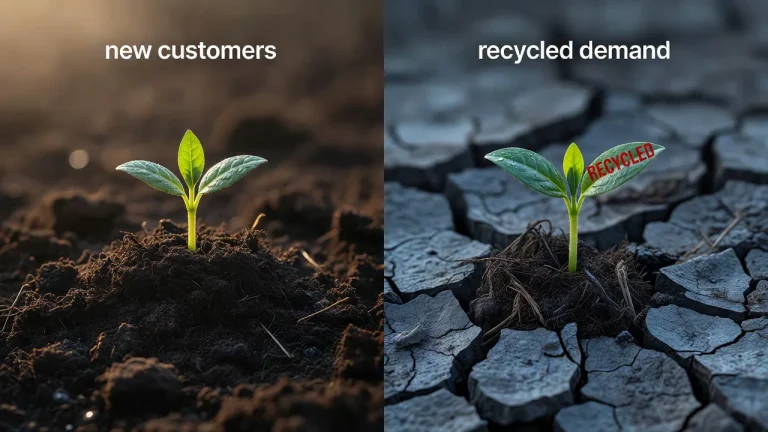
Post-exposure, mature programs added new-to-file as a weekly column, not a quarterly special project. The reason is simple: top by revenue and top by acquisition diverge. A partner can generate high attributed revenue while recycling existing customers, and last-click will make them look like your best performer.
Revenue without NTF is a vanity dashboard. I recommend joining affiliate IDs to first-order dates, or using a proxy from your OMS if the network lacks customer ID. The definition must survive one sentence: new means first-ever purchase date, or first order in 24 months. If you cannot write that sentence, the column is theater.
LinkConnector’s attributed estimates suggest coupon affiliates introduce the purchase funnel 27% of the time and their cookies occur before the cart 69% of the time (JEBCommerce). That means the signal can go either way, which is exactly why you need the NTF column instead of a blanket rate cut. The full KPI and negotiation packet are worth reading before you build the join (New-to-File Rate, NTF Negotiation).
Change 4: Generic vs unique code commission split
Programs stopped paying one rate for every code. The split is straightforward: pay differently for unique partner codes, for generic sitewide codes, and for no code at all. A partner with a unique, per-transaction code is doing a different job than a partner broadcasting SAVE10.
Generic codes leak. They surface on aggregator sites within a day or two, and the checkout extension can serve them to shoppers who never saw the partner’s content. Per-transaction unique codes for purchase-dependent promos reduce leakage because the code is tied to one redemption, not an open loop.
I recommend tiering this cleanly. Unique partner code earns the full checkout-layer rate. Generic sitewide code earns less. No code, if the partner still claims last click through an extension, triggers a review. LinkConnector’s network-wide estimates also suggest 31% of coupon affiliate purchases come from full-price buyers, and average order value is 14% higher when a coupon is used (JEBCommerce). Different job, different pay. That is the principle. Shopify Plus brands already lean this direction, creating 2.67x more unique code discount sets than non-Plus brands (Seguno).
Change 5: Full-path reporting reviewed quarterly
The last-click number hides assisted value. A shopper reads content Tuesday, returns direct Thursday, then clicks a cashback extension Friday before checkout. Last-click pays the cashback partner. Full-path reporting shows the content partner assisted the sale the cashback partner closed. That changes interpretation.
I am not telling you to buy a multi-touch attribution stack tomorrow. Most programs do not have enough conversion volume for reliable MTA, and promising a multi-touch fix before checking your volume floor is a mistake. A quarterly path review is enough. For programs that need a causal answer beyond path overlap, a geo holdout test is the practical next step (Geo Holdout Testing).
Pull assisted versus last-click overlap for your checkout-layer partners. Compare how often they appear only at the final click versus anywhere earlier. Before I trust a last-click number, I check whether the partner appears anywhere earlier in the journey. If a partner never shows up except as last click, that is capture. If they appear earlier in a meaningful share of journeys, they are doing real work. Read the MTA volume honesty article before you promise anything fancier (Multi-Touch Attribution Volume Requirements).
What did not change (and what to do next)
Here is the counterargument worth taking seriously: most programs did not purge coupon or cashback partners after Honey. Last-click default remains the industry standard. A reasonable operator can argue that checkout-layer partners recover abandoners and add incremental conversions, and the data sometimes supports that. Removing them outright can cost real revenue.
The rebuttal is not that coupon partners are evil. It is that the default settings still overpay for capture. You do not need to purge the partner type to fix the pay rule. Shorter windows, NTF on the dashboard, and code-type splits do most of the work without blowing up the program. Google and Comscore data showed 94% of coupon affiliate paid search transactions were incremental, a reminder that some coupon partners add value even when the category gets blamed (JEBCommerce).

For publishers, the hygiene is separate. When testing codes, use a separate-session checkout. A browser with coupon extensions installed can drop cookies and contaminate your test, making you chase a pattern that only exists in your test environment. Do a URL-parameter spot check before checkout to confirm the affiliate ID is still yours. If your audience wants both the discount and your creator credit, the two-browser workaround is the blunt but reliable move: one clean session for your affiliate click, another for code hunting.
The Chrome Web Store direct-benefit ambiguity remains a policy vacuum. The rule says extensions cannot inject an affiliate link without a direct user benefit at that moment, but what counts as direct benefit is still debated. Do not treat that ambiguity as protection. Clawback exposure (Clawbacks) and brand-bidding overlap (Brand Bidding) are adjacent risks worth auditing in the same sitting.
One-sitting audit checklist + short FAQ
I recommend running this in one sitting.
- ☐ Pull the extension list and audit checkout behavior.
- ☐ Confirm stand-down terms are in the agreement.
- ☐ Set window rules by partner type.
- ☐ Add NTF as a dashboard column.
- ☐ Split commissions by generic versus unique code.
- ☐ Pull the assisted versus last-click path report once a quarter.
Six items, one afternoon. If you only have one hour, do the NTF column and the extension audit. Those two expose the most hidden capture.
Does PayPal payment method steal commission? No. The payment method does not overwrite cookies. The extension overwrite does. Blaming the wallet is a category error.
Is Honey the only extension that does this? No. The last-click layer behavior is category-wide. Any checkout-layer partner that can fire after an earlier affiliate click can capture the sale under last-click rules. The fix is program policy, not a single vendor blocklist.
Pull the report before your next payout run. If the top of your revenue list and the top of your NTF list diverge, you are already paying for capture you did not see.