Realistic Affiliate Side Hustle Timeline: Months, Not Miracles
Most side-hustle content sells an outcome, not a process. The promise you will see (like $500 a month in 30 days, a dashboard screenshot with five figures circled) is a marketing asset, not a measurement. The structural scenario that actually plays out is quieter and far more useful. An operator promoting a $1,500 product on a single surface saw $24 in commissions after three months. That is not a failure. It is a start with data.
A side-hustle pipe is measured in clicks and close rates, not income reports. The question is never “can I?” It is “what does four hours a week actually get me, and when?” This piece answers that for the affiliate marketing side hustle: timelines and thresholds rooted in how the math actually moves, not in a guru scoreboard. No fabricated income ledgers, no “I replaced my 9-to-5 in 90 days” diary. Just the measurement-first view.
The Realistic Timeline (Spoiler: It Is Not 30 Days)
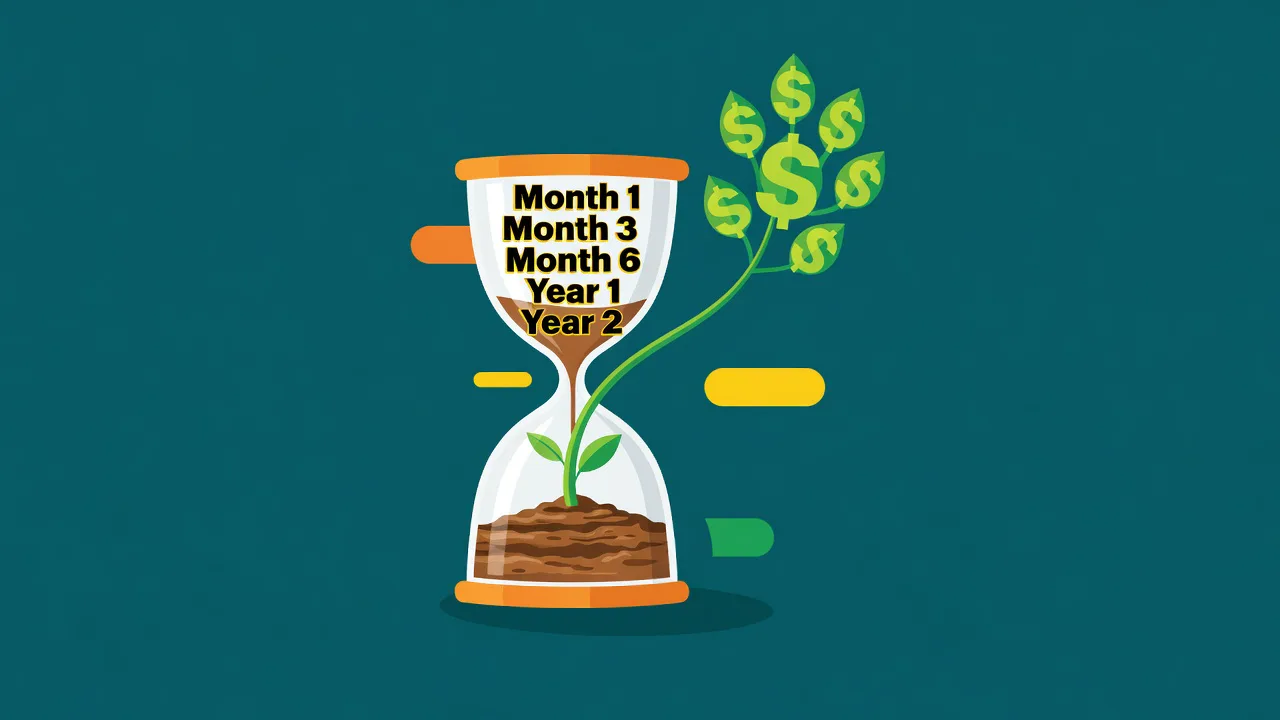
The timeline most operators experience runs in phases, and the early months are about measurement, not revenue. PostAffiliatePro notes that consistent income typically arrives between six and twelve months. That aligns with what I recommend for side-hustle pacing: you are shipping and tracking for months before the pipe does enough work to pay a bill.
Week 1 is the only sprint. One niche, one offer, one distribution surface, and one tracked, disclosed link live. If you have not shipped that, the beginner start map is the week-one reference. Without a tracked link, there is no pipe, no data, and nothing to discuss.
Months 1 through 3 bring the first clicks. Traffic builds slowly, especially on organic surfaces. A first commission may land, or it may not. The structural $24 data point sits here. The job is measurement, not revenue. A simple ledger with date and clicks is enough.
Month 6 is the close-rate judgment. If your link gets clicks but zero conversions after six months, the data tells you to pivot: the offer does not fit the traffic or the audience does not trust the surface. If it converts, even modestly, you have something to scale. This is not a quit moment; it is a decision window built on behavior, not hope.
Year 1 brings a first meaningful commission pattern. Not “quit your job” territory. Pattern territory. That pattern proves the pipe works and gives you a baseline to measure from.
Years 2 and 3 bring compounding effects. Skill stacking (web, copy, conversion-rate hygiene) accumulates. The surface gains authority. Recurring commissions, if the offer includes them, multiply. A $30/month SaaS product with a 20% recurring commission pays $72 per year per active referral. Twenty active referrals produce $1,440 annually, not from more hours but from existing customers staying. That is the boring math that rewards consistency. (For a 12-month planning model that discounts soft money, see the revenue forecasting breakdown.)

Side-Hustle-Specific Pitfalls (Limited Hours Make Them Costlier)
At four hours a week, every detour costs months, not days. The following traps are predictable and avoidable.
Shiny object syndrome hits harder on a side-hustle clock. Course-hopping or product-hopping burns weeks of surface-building time. The fix is simple: one surface, one offer, one tracked link first. Ship before you shop.
Course-as-consumption versus pipe-as-shipment is another expensive swap. A course that only teaches you to sell the course itself is MLM-structured, not affiliate. A course that does not produce a live tracked link within 30 days is a content binge. (Run the five cashflow questions from the scam-legit filter if the promise feels too smooth.) The alternative is the start map: you are measuring clicks by week’s end, not modules completed.
Free-to-start is not zero-cost. Joining an affiliate program costs nothing. The pipe itself has costs: a domain (roughly $12 per year), basic hosting, and time. Those are operational expenses, not enrollment fees. Pretending they do not exist leads to a stalled launch.
Why most operators quit early is a perception gap. The promise of “passive income in 30 days” crashes into the reality of six to eight months before the pipe produces anything spendable. Side-hustle volume, at four hours a week, stretches that timeline further than a full-timer’s. Knowing this upfront is the difference between a month-four quit and a month-twelve payoff.

The 4h/Week Operator’s Rhythm: What It Buys and What It Does Not
Consistency is the side-hustle edge. Four hours a week for six months beats twenty hours a week for two weeks followed by burnout. The operator who keeps showing up outlasts the sprinter every time, because the pipe needs time to build traffic and trust.
What can you actually ship with four hours a week? In week one: one surface test, one offer research cycle, and one tracked link live. After that, surface maintenance and one new test per month. This is not a content calendar; it is a test calendar. One variable changed, measured, and learned from per month. That cadence prevents overwhelm.
Without a website is possible but slower. A social-only surface, such as Instagram, TikTok, or a pinned tweet, can generate clicks, but building trust and traffic density takes longer than an owned platform. (For the full platform-risk discussion, see the domain resilience playbook.) I recommend owning at least a minimal hostname you control, even if it is just a landing page.
Day-job expertise acts as a starting context that compounds faster. You already know which problems matter, how buyers talk, and which offers might fit. That allows you to judge product fit in hours, not weeks. Your career is not an obstacle to the side hustle; it is the first surface’s raw material.

The Month-6 Mirror Test: Data Decides Keep, Pivot, or Quit
Run this diagnostic at six months. The data will tell you exactly where the pipe is clogged.
If your tracked link gets zero clicks, the problem is distribution. The surface is not reaching an audience. Fix the surface or grow the traffic source.
If the link gets clicks but zero conversions after six months, the offer does not match. Pivot niche or offer. The clicks prove the surface works; the lack of conversions proves the match is wrong. Do not keep throwing time at a mismatch.
If the link converts but commissions feel tiny, check the ticket size of your niche. High-ticket and low-commission are both valid strategies, but the math must align with your surface’s natural authority. A $30 per month recurring commission earns $360 per year from one customer. A one-time $50 commission needs seven sales to match that. Pick the model your niche supports, then judge the earning unit, not the headline rate. (For payout clawback diligence, see the program economics deep dive.)
When close rate is stable, level up. Test a second surface, an adjacent offer, or add an email bridge. A stable close rate means your measurement system works and the audience trusts the recommendation. Now expand the pipe, not abandon it.

The Long Tail: Why the Boring Pipe Wins
Skill stacking, surface authority, and recurring commissions compound regardless of ticket size. The operator who kept showing up at four hours a week for three years owns the surface. No drama. Just the quiet math of a pipe that keeps converting.
The long tail is where affiliate marketing’s measurable edge lives. It is why the model is worth the wait. And it is why the pre-launch promises of “$500 in 30 days” do more damage than good. They set expectations that the real timeline cannot meet, and they push operators to quit right before their pipe begins to produce. (The forecasting piece walks through the 12-month slow-build model that survives soft money.)
Your Pipe Starts with One Tracked Link
If you have not yet shipped your first tracked link, the beginner start map is your week-one guide. One niche, one offer, one surface, one disclosed link. That is the pipe.
If your link is live and you are measuring clicks, the next question is close rate. Before you scale spend into a network class, run the affiliate network due diligence checklist for beginners. Program economics and forecasting depth live in their respective satellites, linked above. The month-6 mirror test is your next milestone. Data will tell you whether to keep, pivot, or quit. And if the pattern is there, the long tail is waiting.