Affiliate Marketing Without a Website: What You Are Actually Renting
A question that shows up in search data with grinding regularity: can you do affiliate marketing without a website? The short answer is yes: you can start without one.
The incomplete cheerleader sentence sold by SERP listicles stops there. The full operator sentence is this: you can start without a website, and you are still renting distribution that can vanish overnight. The interesting question is not if you can skip the site; it is what you are renting, what can vanish, and when an owned destination stops being optional.
If you have not yet shipped a tracked, disclosed affiliate link on a live surface, start with the beginner start map instead of this piece. That map gives you the week-one pipe. This article picks up the “without a website” question and reframes it as a rented-surface-versus-owned-destination choice, not a “7 proven methods” scoreboard.
You don’t need a website is a sentence that needs a second clause
Rented distribution can vanish overnight. Operators often search “affiliate marketing without a website” hoping for permission to skip the expense and friction of building a site. Permission granted.
You can start affiliate marketing with just a social profile, a YouTube channel, a link-in-bio hub, or an email you control. But the permission comes with a structural asterisk that cheerleader content buries.
A common failure mode captures what happens next. An operator picks a few sounds-easy platforms, posts product links with “link in bio” calls, and watches views accumulate while bio clicks sit near zero. The feed already paid the dopamine; there is no reason to leave the app.
The operator then blames the product, the niche, or the “no website” advice, when the real problem is that the rented surface never created a handoff intent, and the destination was a naked affiliate URL that gave no second touch.
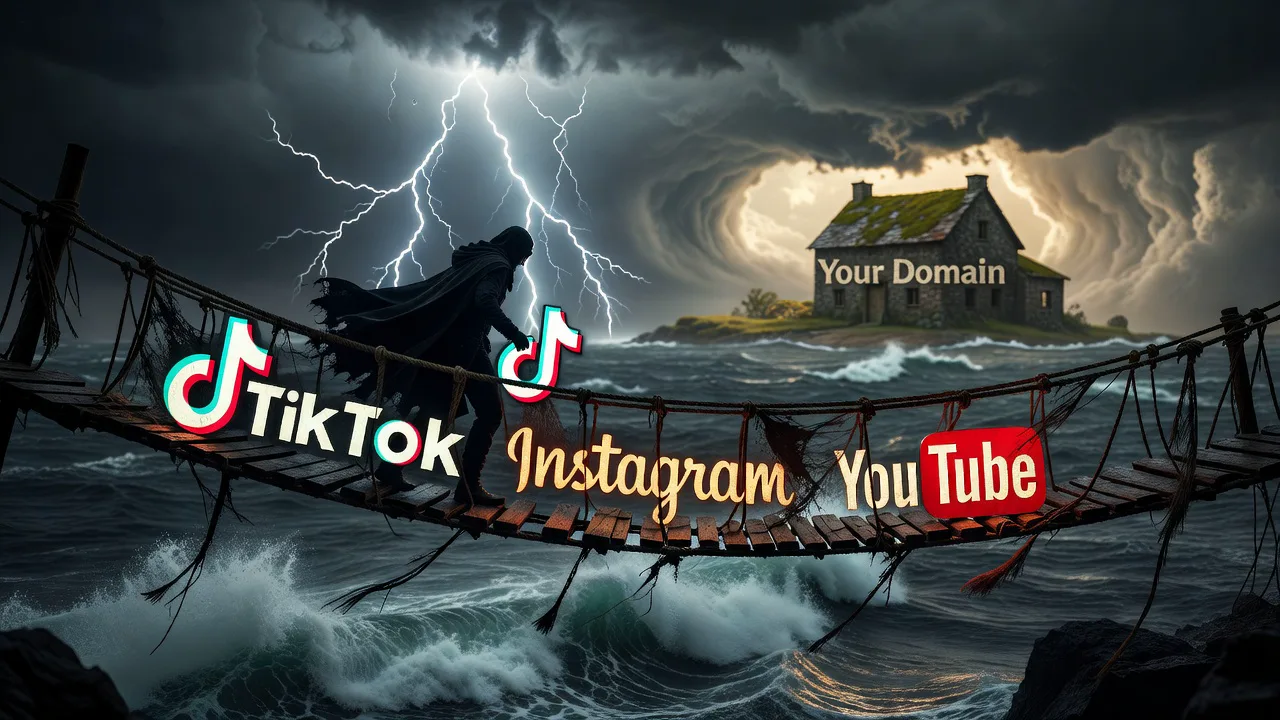
The thesis: a website is optional at the start, but an owned destination is not magic revenue. It is control of the handoff. On rented surfaces you are borrowing attention, placement, and the right to even exist there. Tomorrow’s algorithm change, platform terms update, or account ban can remove that surface entirely.
The question is not “can I save $8 a month?” but “what am I renting, what can vanish overnight, and when does ownership stop being optional?” This article walks through that graduated path, without a methods listicle, without a best-programs scoreboard. I’ll use structural scenarios and operator patterns, not fabricated income ledgers.
Before I trust a “you never need a website” claim, I look for whether the person making it also sells a course that does not include building an email list or a domain. That’s a warning light. Your week-one job is one pipe, not a mythology about forever.

One pipe on a rented surface (website optional at start)
The start map I link at the top boils down to: one niche, one offer, one surface, one tracked disclosed link. Website optional for week one.
If you have not shipped that pipe, go there now before you try to stack five platforms. The rest of this section assumes you are ready to think about which rented surface carries the pipe, and how to avoid the common first-week mistakes that get mistaken for “without a website is impossible.”
Surface classes to pick from, not a cheerleader list:
- Feed platforms (TikTok, Instagram, Facebook Reels). Fast, algorithm-heavy, often volatile. Great for demonstrations, quick reviews, problem/solution. The downside: reach can spike and then die without explanation, and conversion depends on whether you create a real handoff reason.
- Search-like or long-form surfaces (YouTube, Pinterest, a Medium post). Slower to build, but often carry denser intent. A viewer searching “best budget espresso machine” on YouTube has a buying mindset that a person doom-scrolling may not.
- Email you control (even a free newsletter on a platform like Substack). It is owned in the sense that you have the list, though the platform could change rules; still, it is closer to an owned asset than a social profile. Email gives you follow-up, which matters for anything that isn’t a low-ticket impulse buy.
Pick one to start. Do not try to be everywhere. Mastering one surface until the workflow is semi-automatic is the only way to create a repeatable pipe before you diversify. Stacking five surfaces without a single one delivering measurable clicks is a tax on your time and energy.
Disclosure on social is non-negotiable. Networks require it. The FTC expects it. Yes, a clear “I earn a commission if you buy through this link” can feel like it cools the click. But hiding the relationship or burying it in a thread of hashtags kills trust faster than a slightly lower click-through rate.
Compliance is part of the pipe, not a post-click sticker you apply later. A common failure mode: operators nudge disclosure into invisibility and then lose a program approval or get a network warning. The conversion bump from obscuring it is never worth the exposure.
If you haven’t shipped the pipe, use the start map. We won’t rebuild niche/offer/surface tutorials here. The point for this article: a website is optional on day one, but the surface you choose is still rented.

Link-in-bio failure modes (and the handoff fix)
A common failure mode for operators without a site: “I get thousands of views on my reels, but almost nobody clicks the bio link.” That’s structural, not personal. The feed already delivered the dopamine hit; the post satisfied the curiosity. Asking a viewer to then navigate to a profile, click a link, and browse a new destination is a bridge too far unless the content itself manufactured a handoff reason.
This is where bio-link cheerleading falls apart. A vague “link in bio for more” does not create intent; it adds a chore.
Formats that create handoff intent: a comparison that can’t be resolved in the post (“I tested three budget vacuums, and the winner surprised me – full breakdown at the link”), a review that leaves the critical detail as a tease, a problem/solution that promises a checklist or a discount link. The content must make leaving the app feel like a reward, not an interruption.
Once someone does hit that bio link, the destination matters enormously. Sending them directly to a merchant product page can work for a low-ticket impulse item. But for mid-ticket and high-ticket offers, a thin landing or a capture step often beats a naked affiliate URL.
High-ticket buyers do not click and buy; they research, compare, and need a second touch. If you don’t capture an email, you built a pipe that leaks at the final joint.
A structural scenario: an operator sends thousands of clicks to a $500+ software trial page with zero conversions, then adds a simple bridge page that explains the offer and captures an email, and starts seeing registrations. Same traffic, different handoff.
Rented bio-link tools and free hosting platforms are fine as temporary hubs. Just know they are still single points of failure. If your entire affiliate presence is a Linktree page with no email list behind it, a change in that tool’s terms or a platform ban erases your entire conversion infrastructure in one moment.
A specific structural scenario: an operator posts great comparison reels, gets clicks from the bio, but the bio link leads to a messy hub with 12 options. The same operator, after focusing on one offer and pointing the bio to a simple landing, doubles the effective clicks to the merchant. The lesson: raw clicks with no follow-through usually mean the destination or offer fit is broken, not that without-a-website is impossible.

The SPOF cost of rented distribution
When operators ask “do you need a website for affiliate marketing,” what they are often really weighing is whether they can skip the risk of renting. Every rented surface is a single point of failure. The real cost of “no website” is platform terms-of-service changes, algorithm cuts, and account bans, not the domain registration fee.
Instagram can throttle posts that attempt to send traffic off-platform. TikTok’s commercial-link rules can shift without notice. A YouTube channel can be demonetized or limited over a policy tweak that had nothing to do with your content quality.
Network bans are another layer. Affiliate networks read traffic-source rules strictly. If a program prohibits social-media direct-linked ads and you buy Instagram Story traffic with a direct link, your network account could be terminated before you see a payout. Read the allowed placements before you scale a surface.
A common failure: an operator gets approved for a program, runs a campaign that violates an obscure source rule, and loses not just commissions but the ability to reapply. That kill switch sits in the network’s terms, not your post analytics.
Ban hygiene is about trust math, not evasion. You don’t need cloak-and-dagger tactics. You need a value-first participation pattern that makes your account look like a legitimate publisher, not a link-dropping bot. Post useful content, engage genuinely, disclose clearly, and build slowly. When the first link appears, it looks like an extension of your authority, not spam.
This is trust math, not a disguise playbook. I will not teach evasion how-tos. If you are looking for ways to hide links, bury disclosures, or game algorithms, this article is not for you. You will eventually get caught, and the reset will cost you more than a cheap domain ever would.
Diversify surfaces only after one surface is semi-automatic. A single-platform income stream is a SPOF even when commissions look fine.
A structural scenario: an operator loses an entire month’s revenue when a social account is disabled for a mistaken policy flag, with no email list, no second surface, and no backup.
When you are ready to own a destination and need resilience depth, the domain SPOF playbook covers the operational hardening you’ll need – but that is for after you have a live pipe and are ready to own the infrastructure. Right now, the point is: rented distribution can vanish, and the cost of that vanishing is the real bill for skipping a website.

When to graduate to an owned destination
An owned site is not magic revenue. A common failure mode: an operator buys a domain, installs a theme, and waits for commissions to roll in, then concludes the website did not make a difference. Of course it didn’t. The site is just a container.
The value is control of the handoff: an email home, evergreen pages that don’t evaporate when a social account is banned, and a URL you can move to a new host if your provider goes offline or changes terms.
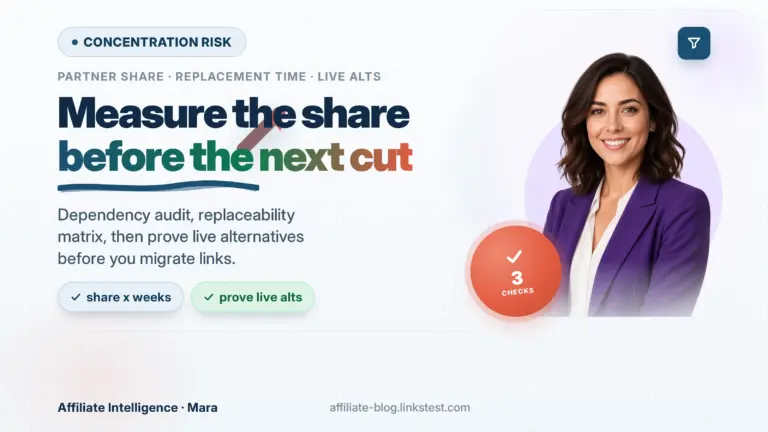
Graduation triggers are specific. You should put a cheap domain and basic hosting behind your pipe when one or more of these are true: you have measurable traction on one rented surface (consistent clicks, even if commissions are small); your offer requires email follow-up because it’s mid- or high-ticket; the majority of your income depends on a single rented app, and you feel the concentration risk every time you open a notification about policy updates.
Ownership does not require a 50-post blog on day one. A single page site with an opt-in form and a pre-sell bridge page that captures emails can turn a rented surface into a funnel with durability. The cost is negligible relative to the cost of rebuilding from zero after a ban.
I recommend operators start with a domain and a lightweight no-code builder long before a full content site. That tiny hub gives you a place to host your lead magnet, store your evergreen copy, and point any rented surface toward a common capture point.
Once you own a domain, resilience matters. The domain resilience playbook covers registrar locks, recovery email off-domain, DNS separation, and the other failure modes that can kill an owned site just as dead as an account ban. But don’t read that until you are ready to harden the domain; graduating to ownership is step one, hardening is step two.
One more note for the social-only path: it often runs slower than operators expect. Organic “free” traffic compounds over months, not weekends. The realistic side-hustle timeline walks through those clocks. If you are months into a social-only strategy with traction but not yet seeing payouts, that timeline can confirm you are on the right track; ownership may accelerate the next stage by adding email follow-up.
Programs that act as a due-diligence filter
The commercial demand beneath “affiliate programs that don’t require a website” is loud. I am not going to satisfy it with a top-10 list of logos. That would be a disservice. Instead, I’ll treat no-website acceptance as a due-diligence class question, not a popularity contest.
Some programs and networks are explicitly open to social-only traffic. Many SaaS affiliate programs, digital product marketplaces, and VPN tools accept social traffic; social-only programs often set organic-follower or activity floors – operators must read the current program terms.
For example, Amazon Associates itself does not require a follower count: it requires a live content property (site, blog, YouTube, or app) and qualifying sales activity to stay active. The separate Amazon Influencer Program, built for social-only creators, reviews follower count and engagement instead, though Amazon does not publish a fixed minimum. Other programs, especially those on major networks like CJ Affiliate or Rakuten, often require a verified website during approval. Approaching them without one is usually an auto-reject.
When you see a listicle of “programs that don’t require a website,” realize the hidden filter: acceptance does not equal profit. A program that accepts a TikTok account with a moderate following may have conversion economics that only work for accounts with highly engaged audiences. The approval wall is just the door; the room behind it contains payout clocks, disclosure rules, allowed placements, and clawback terms that matter more than the logo.
I recommend you run the fit-tests from the networks due-diligence checklist before you pick a program. That checklist covers the signals you need: active affiliate manager, no “done-for-you” upsell, clear terms on where you can place links, and an incentive structure that aligns with your traffic source. If a program’s listed commission looks great but the terms forbid the exact social placement you plan to use, you’ve just filtered it out. That’s DD doing its job.
Later, if I publish deeper fit-test pieces, they will be about class and rules, not a logo roundup. For now, treat “accepts social media traffic” as a column on your checklist, not a scoreboard position.
What to do next
Your next move depends on where your pipe sits today.
- If you have not shipped a tracked, disclosed affiliate link yet, start with the beginner start map. That piece walks you through one niche, one offer, one surface, one live link. Without a live pipe, the rented-vs-owned conversation is academic.
- If your pipe is live on a rented surface and you are ready to own the handoff, read the domain resilience playbook. It covers the operational hardening you need once a domain becomes part of your infrastructure, not just a placeholder.
- If you are choosing among programs that accept social-only traffic, use the networks due-diligence checklist. Focus on class and rules, not a scoreboard. The filter questions there will save you from joining a program that looks open but is built for a different kind of publisher.
Rented surfaces are not a jail sentence. They are a fast, flexible way to ship a commission pipe. But they are never permanent infrastructure, and treating them as such is the quietest way to lose everything you built with the switch of an algorithm or a terms update. Ownership is not about getting a website to feel legitimate. It is about having a handoff you control when the rented lights go out.